Rebel Footsteps and Green-and-White Hoops: Inside the AICSC’s Dublin Walking Tour
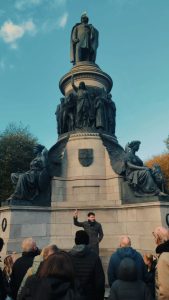
On a Sunday in November, Celtic supporters from across Leinster swapped the terraces for the laneways of the 1916 Rising.
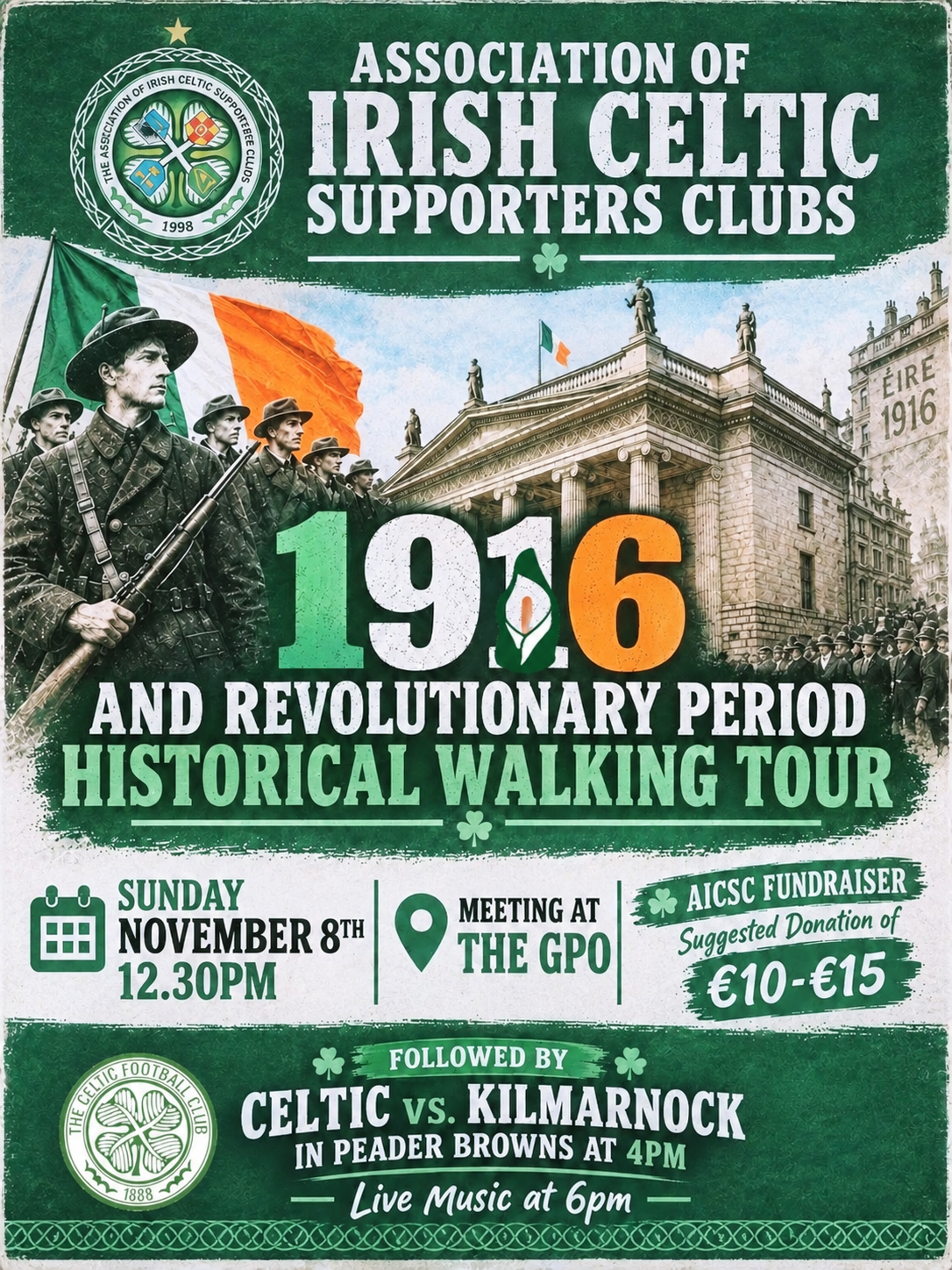
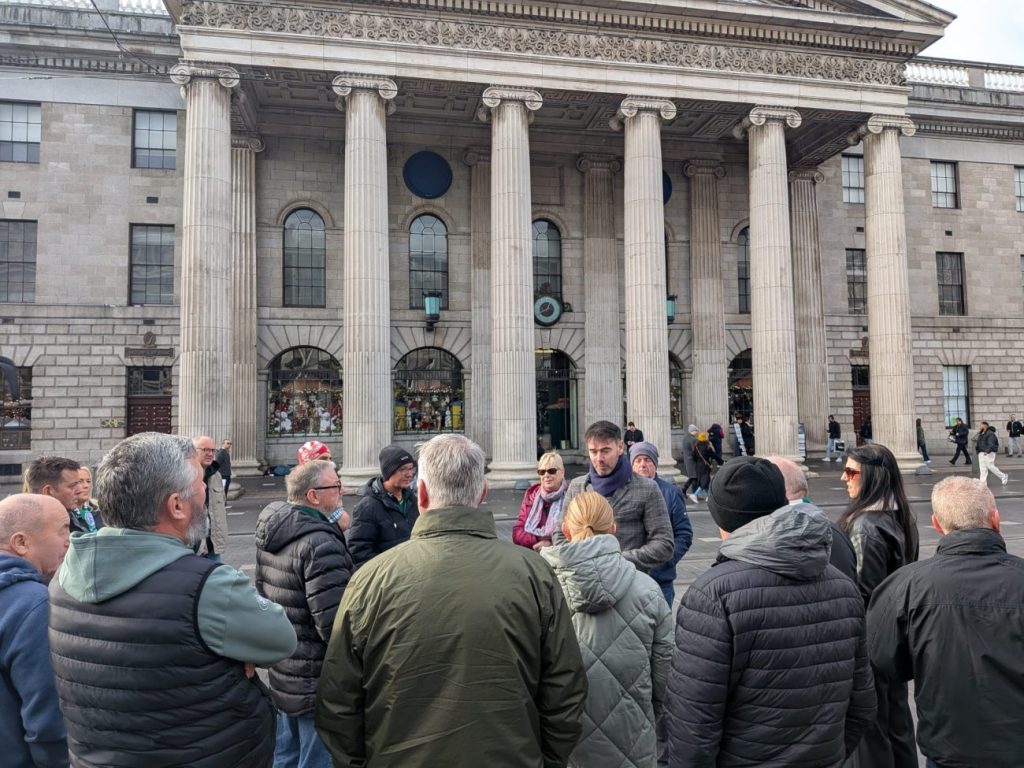
Dublin’s history doesn’t sit politely behind glass. On Sunday, November 8th, it was waiting on the pavement. The Association of Irish Celtic Supporters Clubs (AICSC) gathered members from clubs across Leinster and beyond for a walking tour of the 1916 Rising and the Revolutionary Period, led by Seán Fox of Malahide CSC.
This was no dry recital of dates. The tour steered the group away from the well-worn textbook version and toward the stories that rarely make the plaque: small, human details tucked into streets, laneways and buildings that have somehow outlived the upheaval they witnessed.
The walk began at the GPO, the HQ of the Rebels and symbol of their resistance. The tour heard stories of the week’s events both inside and around the GPO. The tour then retraced the final steps of the Rebels towards Moore Street, where the rebel leadership set up its last headquarters, gave a vivid sense of the ferocity of the fighting and the improvisation needed to survive it. Narrow lanes that look unremarkable today were, in 1916, the center of the 1916 story and final days.
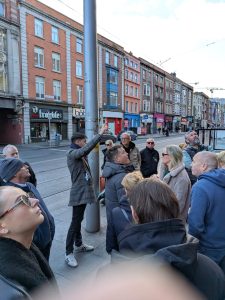
Along the route, the tour pulled individual stories into sharp focus: the heroics of The O’Rahilly, the abduction of the King, and the treatment of Tom Clarke and Seán Mac Diarmada, which stoked Michael Collins’s appetite for revenge against one particular British Captain.
Then the tour turned south. Liberty Hall’s place at the heart of the revolutionary movement came into view, along with the contribution of Rosy Hackett and the part played by the Helga during the Rising. From there the story moved into the War of Independence: the Squad, Bloody Sunday, and the contest of intelligence and counter-intelligence. Among the highlights was the tale of how IRA spies helped dismantle the notorious Ciro Gang.
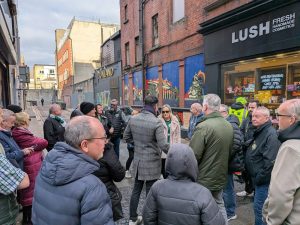
Around Trinity College, the focus shifted to the different kinds of warfare waged during the Rising and to Dublin Castle’s strategic weight as the seat of British administration for centuries.
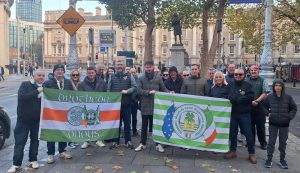
For the AICSC, though, the afternoon was about more than history. Bringing together so many clubs under one banner underlined what the association is really for. Supporting Celtic is the starting point; friendship, shared interests and community are the destination.
The day ended as any Celtic gathering should. The group decamped to Peadar Brown’s Pub to watch the Bhoys take on Kilmarnock, and live music carried the evening onward, a fitting finish to an afternoon of history, football and good company.
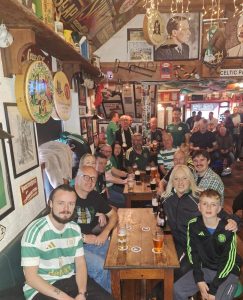
The AICSC extends its thanks to everyone who took part. It was another fine event, and another reminder of the bond that links Celtic supporters’ clubs across Ireland and beyond.